
According to Johns Hopkins Bloomberg School of Public Health,

about 1 in 10 adults in the US experienced mental health crisis in the last year.

Our lived experience combined with time spent supporting people with mental illness has shown us that it is common for mental health crisis to be mishandled and to go unresolved for extended periods of time.

 Examples of mishandling crisis:

  • Providing outdated info or dead-end referrals
  • Reacting as if the situation is a ticking bomb
  • Unnecessary use of police or physical force
  • Connection to incompatible or inappropriate care

Crisis can go unresolved if treatment is inappropriate or doesn’t address the non-medical contributors to the person’s elevated state.

 Unresolved crisis can…

  • Result in repeated hospitalization
  • Further escalate negative symptoms
  • Complicate future treatment
  • Increase risk of self harm or suicide

Jump to an in-depth list of complications local residents face as it relates to crisis response and treatment. Then come back for more info on IMPACT.

Our organization wants to help the greater Lansing area
 improve its responses to crisis and get residents the help most appropriate to their needs. 

That's why we created IMPACT IMPACT IMPACT
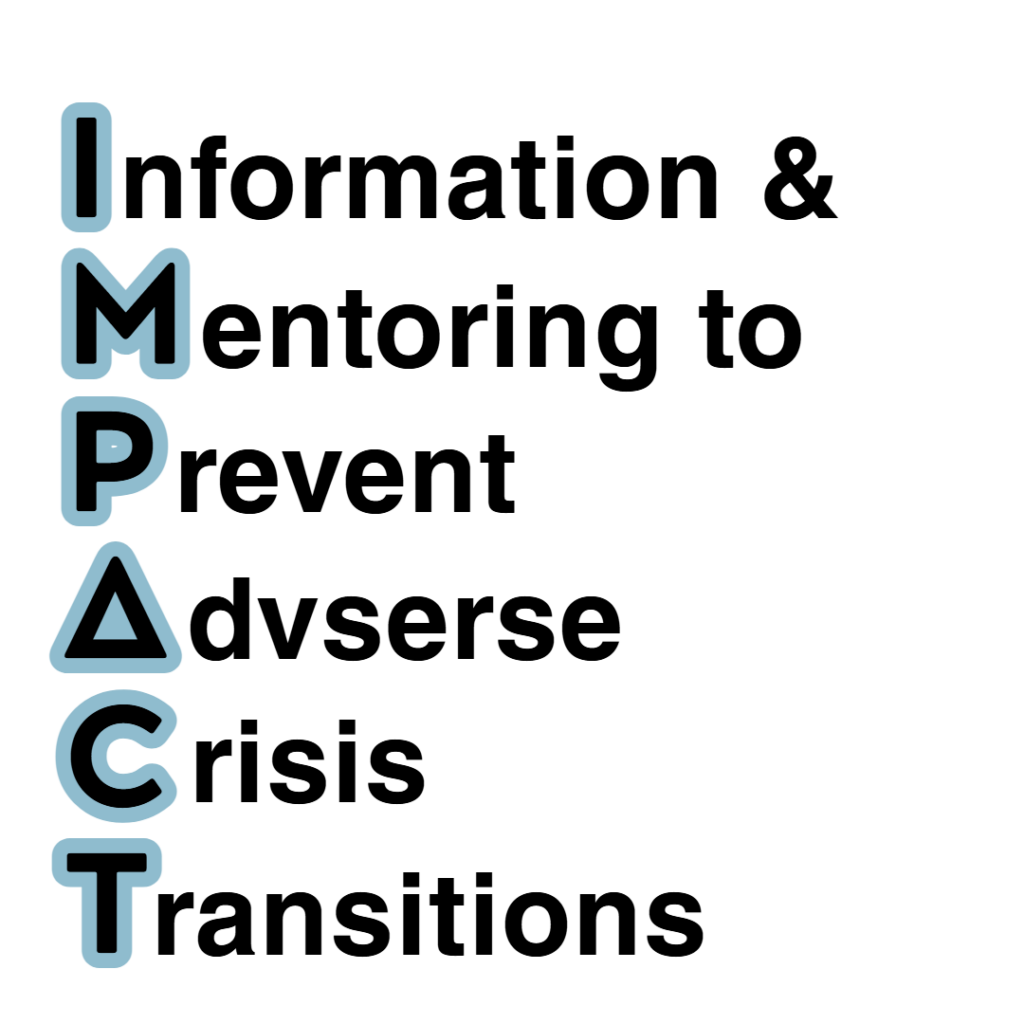
     The objectives of IMPACT are to

→ Collect feedback on residents’ experiences with crisis transitions in the greater Lansing area

→ Combine feedback with basic evidence-based workshops to provide training and mentorship to organizations serving vulnerable groups who may experience crisis

→ Advocate to larger health systems and first responders for improved crisis response and care

Here are some things we want you to know...

Although our staff are trained and certified to provide evidence-based services and workshops including suicide prevention, our work is always presented from the perspective of people who are like ourselves— have mental illness, experienced crisis, and navigated the mental health system— and we do not attempt to appear as clinical professionals. Our mission is to build a bridge of information between those like ourselves and those who serve & support them.
 
How we will obtain feedback from local residents: Between January 30 and February 22, 2026 our organization will make public a survey that can be completed by residents of Clinton, Eaton, and Ingham counties in Michigan. Additionally, the week of February 16, 2026 our organization will conduct a focus group consisting of 5-10 people who reside in the tri-county area. (This content will be updated when those become available)
 
Who can receive information & mentoring: Anyone who supports people at risk of presenting to them while in crisis. Examples include nonprofit organizations, mutual aid organizations, and professional service providers.
 
Key takeaways from the information exchange & mentoring: Basic evidence-based practices for responding when a client/recipient presents to them in crisis, trends with positive and negative crisis experiences of local residents, how non-medical contributors to crisis impacts residents’ experiences with crisis transitions, how providers could modify the way they support them to improve crisis outcomes, and anything else our organization finds valuable during our research process.


Crisis
An acute emotional upset, manifested in an inability to cope emotionally, cognitively, or behaviorally, or to solve problems as usual
 
Crisis Transition
The sequence of events that occurs when an individual moves from pre-crisis/crisis to stability through targeted intervention
 
Non-Medical Contributors to crisis
The external social, economic, environmental, and behavioral conditions that precipitate, exacerbate, or prolong crisis
 
Mentoring
Guidance in the form of initial information exchange as well as ongoing support to achieve positive outcomes

Questions? Interested in participating? Contact Us Here
Signup for our monthly newsletter to get updates on how we’re making mental health recovery possible for more people and how you can be a part of our mission.

Subscribe Here      

Support GG

Interested in supporting our mission? The area we need the most support is for our program, The Nest. Visit our donation page or sign up for our newsletter to get updates on volunteer opportunities.